Most useful termite-prevention work does not begin with a pesticide. It begins with a gutter, a leaking pipe, a stack of firewood or a garden bed that has slowly crept up the side of a house. These details are ordinary enough to disappear into the background. Bringing them back into view is a manageable job for a homeowner.
Subterranean termites use protected routes between soil and food. Conditions that keep the foundation damp, hide its surface or put wood against soil can make a building harder to inspect and maintain. Changing those conditions is worthwhile, but it is not proof that an existing infestation has been eliminated. This guide is about sensible maintenance and observation. If you find insects, suspected mud tubes or damaged timber during the walk, record the evidence and arrange an inspection rather than trying to turn routine upkeep into a treatment project.
Begin with a safe, accessible route
Choose a time when you can see the ground clearly and walk without slipping. Stay on accessible paths. You do not need to climb onto a roof, enter a cramped crawlspace or move heavy structures to make a useful list. If an area is unsafe or concealed, note that limitation and leave it for someone equipped to assess it.
Carry your phone, a notepad and a simple sketch of the house. Work around the exterior in one direction so you do not repeatedly inspect the front while overlooking a narrow side passage. Mark observations by location: "downspout at kitchen corner" is more useful than "drainage bad." Separate immediate safety concerns from routine jobs that can be planned over time.
Observe after rain, but do not wait in danger
Rain can reveal where water collects or runs back toward the house. You can often make those observations from a window or covered doorway. Do not inspect during a storm or walk near electrical equipment in standing water. A later photograph of staining or pooled water can still give a contractor useful information.
Read the gutters and downspouts from ground level
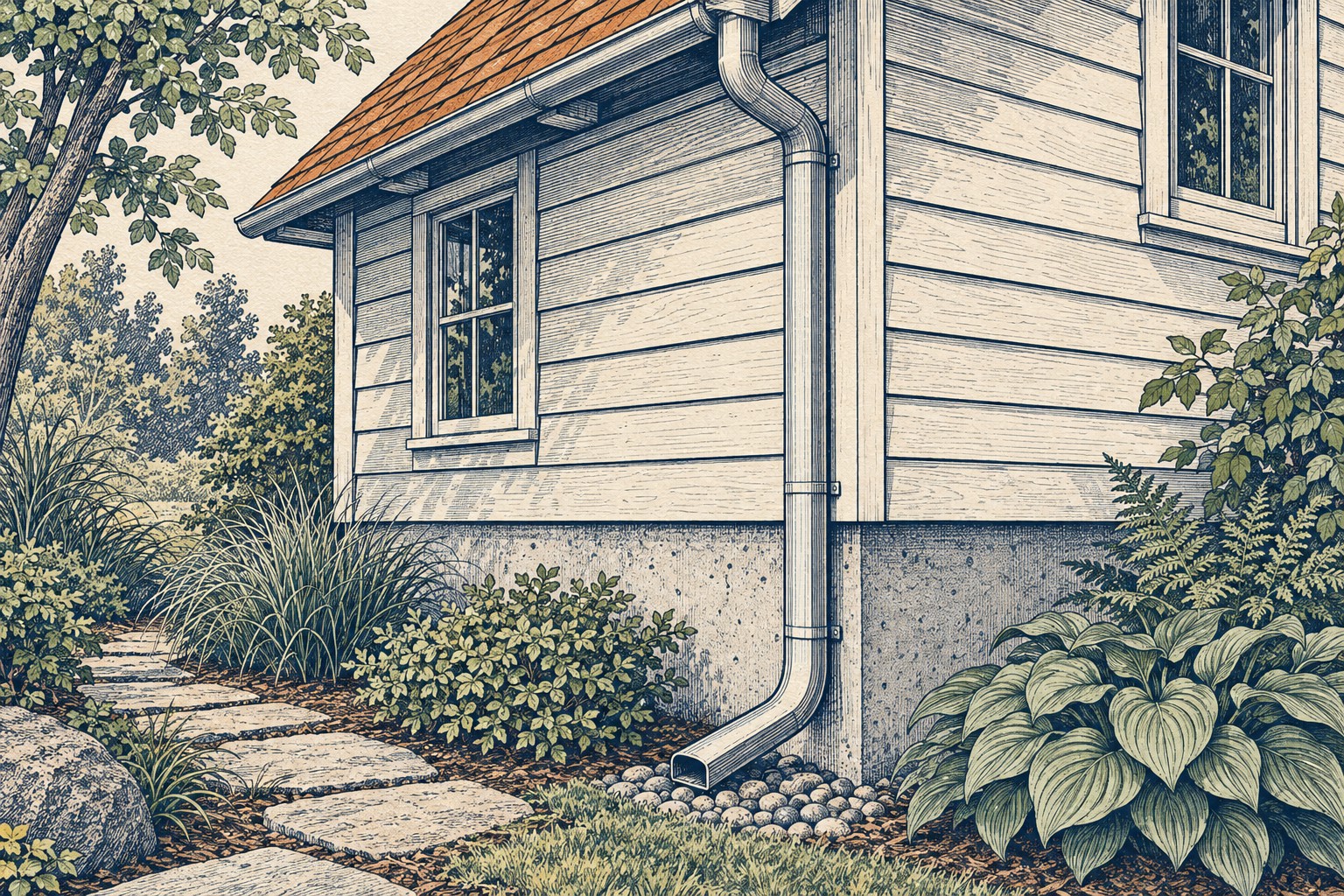
Blocked or damaged gutters can spill water where it is least welcome. A downspout that finishes beside the foundation may repeatedly wet the same area. Look for overflow marks, displaced joints, washed-out soil and water collecting near basement windows. These clues can tell you where a drainage discussion should begin, even if you cannot see inside the gutter itself.
Ask the appropriate maintenance professional to correct blockages or damaged fittings safely. Where runoff is redirected, it should not create a new problem for a neighboring property, a walkway or the building's own drainage system. Avoid treating a fixed distance found online as a universal solution. The grading, discharge location and local requirements matter more than a rule of thumb applied without looking at the site.
A dry afternoon can hide a recurring problem
Photograph the same area on different occasions if you suspect intermittent overflow. Keep the dates and weather notes brief. A pattern of dampness beside one foundation wall may be more informative than a single picture after an unusually heavy storm. It can also help distinguish a drainage issue from an indoor plumbing leak.
Give the foundation room to be seen
A foundation buried behind soil, dense planting or stacked belongings is difficult to inspect. Wood siding, trim and other wooden features should not be covered by earth or left in direct soil contact. The aim is to preserve a visible, maintainable separation between the ground and vulnerable building materials, not to strip a garden bare.
Before changing grade, moving a retaining feature or digging near utilities, get advice appropriate to the work. A cosmetic landscaping change can affect drainage or expose something that should not be disturbed. The homeowner's first job is to identify the condition and plan a safe correction. Larger excavation and structural decisions belong with the relevant professionals.
If a suspicious line or exposed gallery appears as an area becomes visible, stop and photograph it. Our guide to early warning signs explains which observations are worth preserving and why removing every trace can make a later inspection less informative.
Move stored wood and forgotten cellulose
Firewood and leftover building timber often accumulate in convenient places beside the house. Cardboard boxes can spend years on a damp basement floor. Buried scraps from an old project may be forgotten entirely. These materials deserve attention because they can offer food or conceal conditions that need inspection, even when the building itself shows no obvious evidence of termites.
Keep firewood away from the house and avoid storing wood debris against the foundation. Dispose of construction scraps appropriately rather than burying them in the garden. Indoors, organize storage so perimeter walls and accessible framing can be viewed without emptying the entire room. Reducing clutter does not make a house termite-proof, but it makes future observations and professional access less difficult.
Do not confuse cleaning with control
A cleaner perimeter is an improvement. It is not a treatment certificate. If a stack of wood contains suspected termites, ask a professional how to manage the finding without spreading material around the property or obscuring useful evidence. An infestation in stored material and activity in the building need to be assessed as separate observations.
Trace indoor moisture to its cause
A dehumidifier can make a basement feel more comfortable, but a dripping pipe still needs repair. Look for leaks around accessible plumbing, recurring condensation, staining beneath windows and dampness near utility penetrations. Keep vents clear of obstructions. Where a crawlspace or basement has a persistent moisture problem, ask a qualified contractor to assess the underlying cause rather than choosing a ventilation or sealing solution from a single photograph.
Do not reach into wet electrical areas or open equipment to investigate staining. A safe maintenance record can simply say where the dampness was seen and when it returns. If several issues overlap, such as a plumbing leak beside damaged timber, the pest professional and building contractor may each need the same photographs but will answer different questions.
Avoid chemical shortcuts. Household cleaners, improvised sprays and unlabelled mixtures are not a substitute for a structural protection plan. Pesticide products must be used only according to their labels. Prevention work should reduce favorable conditions without introducing an unnecessary exposure problem.
Turn observations into a short maintenance schedule
A list becomes useful when it identifies responsibility and a next step. Group items into drainage, leaks, visibility and storage. Note who will inspect or repair each condition and keep the record with the house paperwork. You do not need a complicated app; a dated page with a few photographs can work perfectly well.
Revisit the list after a repair, a landscaping project or a change to the building. Ask whether the work altered the foundation perimeter, concealed an inspection area or affected an existing termite system. If you already have a service agreement, consult the provider before moving stations or changing areas relevant to the treatment. Maintenance and monitoring should support each other rather than accidentally working at cross-purposes.
When a problem needs professional assessment, bring your notes to the visit. The inspection preparation guide sets out the records and access details that help an inspector understand what has changed and where the limitations remain.
Conclusion
Termite prevention is a habit of keeping the building dry where it should be dry, visible where it should be visible and free from unnecessary wood-to-soil contact. None of those tasks guarantees that termites will never arrive. Together, they make the house easier to maintain, make warning signs easier to notice and give a professional a clearer picture when an inspection is needed.
Frequently asked questions
Will removing mulch eliminate termites?
No. Changing landscaping is not proof of colony control. Focus on avoiding soil or landscaping material against vulnerable wood, maintaining inspection access and correcting persistent moisture conditions.
Does a dehumidifier replace leak repair?
No. It may change indoor humidity, but the source of a leak still needs attention. Ask a qualified contractor to assess recurring dampness and choose an appropriate remedy.
Can I fill every foundation opening myself?
Small maintenance work and major repairs are different tasks. Utility penetrations, structural cracks and water entry may need professional advice. Do not seal over an unexplained problem without understanding it.
How often should I repeat this walk?
Make observation part of routine property upkeep and revisit after weather, repairs or landscaping changes reveal something new. Ask your termite provider what inspection and monitoring schedule applies to your specific property or agreement.