A narrow brown line on a basement wall can be easy to dismiss. So can a few loose wings on a windowsill. Neither looks like the sort of problem that should interrupt a normal week. Yet small, specific observations are often more useful than dramatic photographs when a homeowner is trying to work out whether termites are present.
This guide is for Long Island homeowners who want a sensible starting point, not a diagnosis from a checklist. Subterranean termites spend much of their time out of sight, moving between soil and food through protected routes. You may see evidence without seeing the insects themselves. Equally, damp wood, flying ants and old damage can point you in the wrong direction. The aim is to recognize what deserves a closer look, preserve the useful evidence and know where your own inspection should stop.
Start with the route, not the insect
Subterranean termites depend on sheltered conditions as they travel. The earth-colored tubes they build can cross foundation surfaces and connect concealed spaces with the wood they feed on. A tube may look like a thin streak of dried soil, a branching vein or a small raised seam. Basement walls, support posts and the area where framing meets a foundation are worth looking at from a safe, accessible position.
A photograph is a better first response than scraping everything clean. Take one picture close enough to show texture and another far enough away to show the location. Include a familiar object for scale without disturbing the material. Write down whether it was beside a pipe, under a window or near a known leak. Those details help an inspector connect the clue to the building rather than viewing it as an isolated mark.
A tube is a clue, not a complete verdict
A visible tube does not tell you how much timber is affected or which treatment is appropriate. An apparently empty tube also does not establish that the property is clear. Do not pull off trim, open a wall or disturb structural wood to settle the question yourself. The useful next step is a qualified inspection that puts the evidence in context.
Wings on the sill: termites or ants?
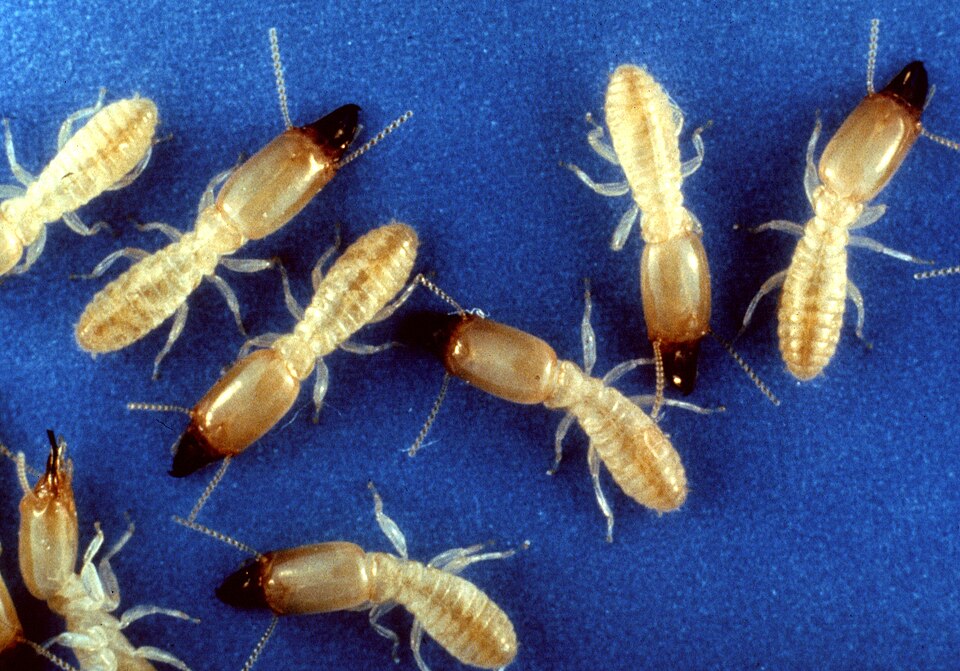
Winged termites and winged ants are often confused, particularly when the first thing anyone notices is a cluster near a bright window. A termite has a broad waist, relatively straight antennae and wings that are roughly equal in length. An ant has a pinched waist, bent antennae and front wings that are longer than the hind pair. Look at more than one feature; a blurred phone image can make any single detail unreliable.
Keep a few specimens in a small sealed container if you can do so without using a spray or putting yourself at risk. Loose wings can also be saved. Record whether the insects appeared indoors or outside and whether they came from one particular opening. An outdoor swarm near a tree is not the same observation as insects emerging from an interior wall, even though both may involve termites.
Avoid turning a swarm into a panic purchase
Killing visible swarmers does not establish control of a hidden colony. Nor does the number on the floor provide a reliable measure of structural damage. If you are unsure what you have found, seek identification before paying for a treatment plan. Clear identification is the beginning of the process, not an optional extra after a sales visit.
What damaged wood can and cannot tell you
Termite-damaged wood may contain hollowed passages with soil-like material inside. But decay, old repairs and other wood-destroying insects can leave confusing marks. A hollow sound is not a species identification. A blistered paint surface is not proof of an active colony. Photographs shared online are particularly poor at showing whether a piece of wood is sound behind its visible face.
Look without forcing. Note soft-looking trim, unusual surface changes and any visible galleries where wood is already exposed. Do not stab a support beam, lift flooring or reach into an unfamiliar void. A pest professional can assess insect evidence; a qualified building professional may be needed to judge whether damaged framing can carry its intended load. Those are related questions, but they are not the same question.
An old treatment record is useful background, not a guarantee about today's condition. If previous owners left invoices, diagrams or warranty paperwork, gather them before the inspection. Dates and treated locations help the inspector interpret what may be historic evidence and what needs current investigation.
The house details that deserve attention
Begin where soil, moisture and wood come closest together. Basement perimeter areas, accessible sill plates, door frames near grade and wooden features touching the ground deserve a measured look. Also note stored firewood, buried scraps from construction and dense planting that makes the foundation hard to see. These observations are not a substitute for inspection; they help describe the conditions around the evidence.
Moisture is worth recording separately. A leaking pipe, a downspout that empties beside the house or an obstructed vent may need attention even when no termites are found. Avoid the opposite mistake of treating every damp corner as a termite emergency. Maintenance problems can have several causes, and solving one does not prove that an insect problem has been solved too.
For a practical way to separate upkeep from treatment, our moisture and prevention guide explains the changes a homeowner can plan without attempting to apply a termiticide.
Build a useful evidence folder
A small, orderly record can save a lot of repeated explanation. Keep dated photographs, the location of each observation, any saved specimens and relevant repair history together. A simple sketch of the ground floor is enough; mark the room and wall rather than trying to draw construction details you cannot verify. If evidence appears again, add a new date instead of replacing the earlier photograph.
Write down what you actually observed. "Three insects by the basement window on Sunday" is better than "the colony has spread upstairs." The first statement helps a professional test a possibility. The second turns an assumption into a fact and may distract everyone from the real route of entry. Good notes are plain, short and specific.
If you rent, share the evidence with the property owner or managing agent through the usual maintenance channel. Do not authorize invasive work on someone else's building. For an owned property, check who is responsible for common areas before commissioning work that could affect neighboring units or shared structural elements.
When to bring in a professional
Arrange an inspection when you find suspected tubes, indoor swarmers or wood damage that could involve termites. Ask for identification, the locations inspected and the limitations of the visit. A sound report should distinguish confirmed evidence from areas the inspector could not access. Be wary of a diagnosis that depends entirely on a single photograph or a promise that one visible spray will solve every hidden problem.
Homeowners comparing local service options can review subterranean termite treatment on Long Island as one starting point for an inspection discussion. Ask any provider to explain the evidence behind its recommendation and confirm the relevant New York credentials independently. A service page can describe an offering, but it cannot diagnose your house.
Avoid accepting a fixed clearance time or repair estimate before the building has been assessed. Treatment, monitoring and structural repair can involve different people and different schedules. Understanding that separation makes it easier to compare proposals without confusing a treatment visit with proof that every damaged area has been repaired.
Conclusion
You do not need to become an entomologist to make a useful first observation. Notice the route, keep a clear record, save specimens when practical and avoid destroying evidence. Then let an inspection answer the questions a photograph cannot. Calm attention is more useful than either ignoring a small clue or assuming the worst from it.
Frequently asked questions
Does one mud tube mean the whole house is damaged?
No. A tube is evidence worth investigating, but it does not establish the extent of damage. Accessible and concealed areas need to be considered separately during an inspection.
Can I identify termites from wings alone?
Wings can help, especially alongside a specimen and location notes. They are not always enough for a confident identification. Keep them and ask a qualified professional to examine the evidence.
Should I spray before the inspector arrives?
Avoid treating the observation as a surface-only problem. Photograph and preserve evidence, then ask the inspector what preparation is appropriate. Any pesticide use must follow its label.
Is a clean-looking basement proof that there are no termites?
No. Subterranean termites can remain concealed. A tidy, accessible basement makes inspection easier, but a lack of obvious surface clues is not the same as a confirmed absence.