Two termite proposals can describe the same house in completely different language. One emphasizes a treated soil zone. The other proposes a network of bait stations and scheduled checks. Each may sound convincing on its own. The harder question is whether the plan fits the evidence, construction and access conditions at your property.
There is no responsible way to choose a treatment from a slogan. Subterranean termite control involves the insects, the building and the conditions around it. The product matters, but so do the application plan, the areas that cannot be reached and the follow-up arrangements. This guide explains the broad difference between liquid soil treatments and bait systems, then turns that comparison into questions you can use when reviewing a written proposal. It is not an application manual, and it does not replace a site inspection or the directions on a pesticide label.
First establish what the plan is trying to achieve
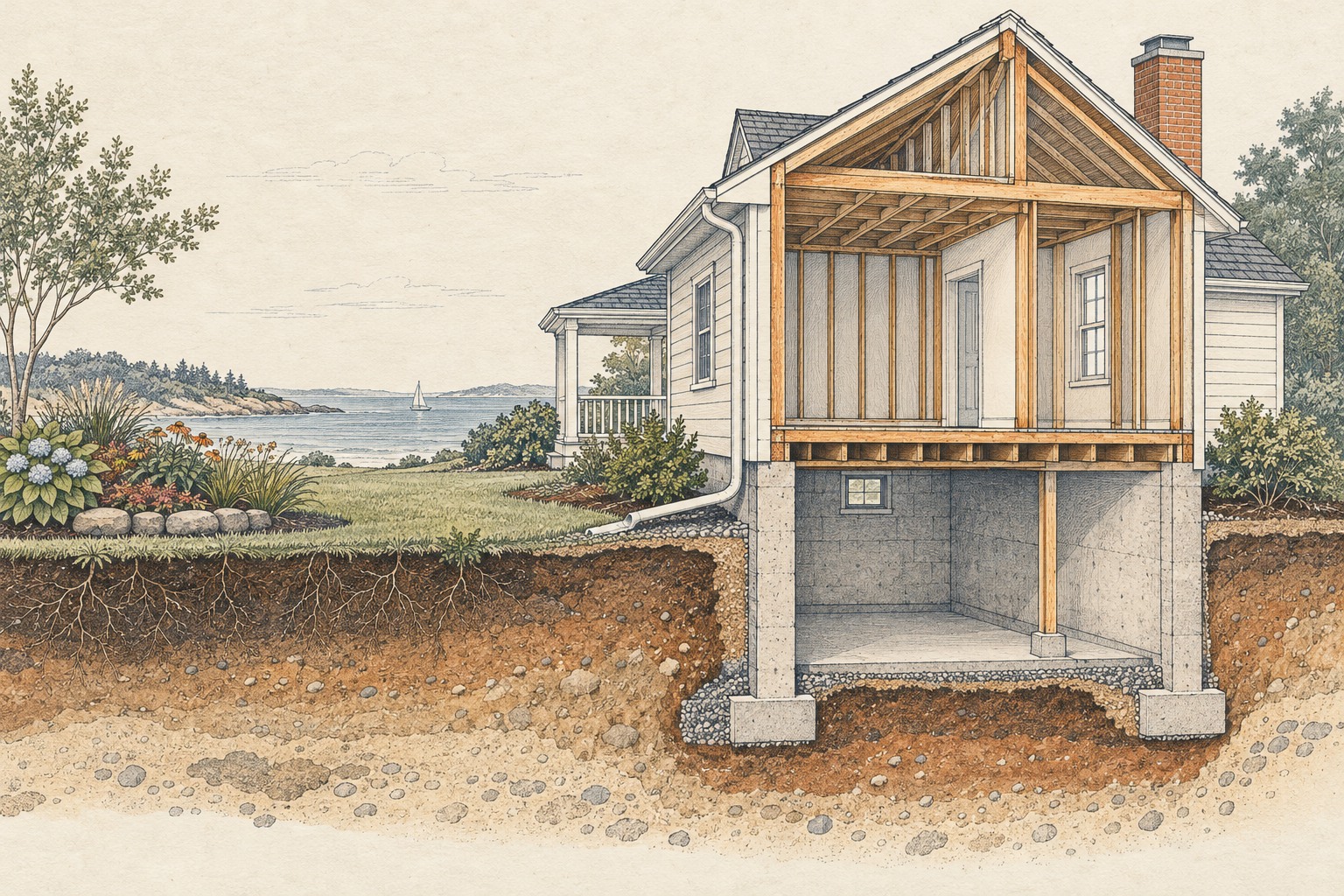
A recommendation should begin with evidence. Ask where termites or their signs were found, which areas were inspected and which were not accessible. An inspector should be able to connect a proposed treatment to the conditions at the house. A generic perimeter diagram is not the same as a diagram that accounts for your porch, extension, basement, utility entries and adjacent paving.
Keep insect control separate from repair. A treatment proposal may address termite activity without replacing damaged wood. Likewise, new timber does not remove the need to investigate the insects that affected the old material. If a quotation combines both jobs, ask for separate descriptions so you know who is responsible for each part and how success will be assessed.
Look for a clear statement of scope
The scope should identify the proposed method, the relevant areas, the product or system and the expected follow-up. It should also explain any exclusions. "Complete protection" is not useful by itself. A practical plan tells you what the company will do, what access it needs and what happens when an area cannot be treated as originally intended.
How a liquid soil treatment is different
A conventional liquid soil treatment places a registered termiticide in the soil according to its label. The purpose is to protect the structure by treating relevant routes of termite access. Depending on the house and the approved application method, the work may involve access alongside the foundation and, in some situations, through paved or built surfaces. The exact approach is a professional decision governed by the product label and the site.
For the homeowner, the useful question is not how much liquid sounds impressive. Ask how the plan addresses the construction details that make your property different. A slab addition, a porch or a difficult boundary may change access. Wells, water features and other site conditions must be disclosed so the applicator can assess the permitted approach. Do not assume that the same method suits every building on the street.
Ask about disruption before the appointment
Will stored items need to move? Is drilling proposed? Who makes good any affected surface? Which areas must remain clear after the work? These are ordinary planning questions, and they should be answered before a crew arrives. Reentry instructions depend on the actual product and use, not on a general promise that every treatment is immediately accessible.
What bait stations do, and why checks matter
Termite bait systems use cellulose material with a slow-acting insecticide. The system relies on termites encountering and feeding on the bait. This is a different approach from treating a soil zone with a liquid product. A station placed in the ground is not, by itself, proof that termites have found it or that the system has achieved its intended result.
That is why servicing is part of the method rather than an optional finishing touch. Ask how the provider checks stations, records findings and responds when feeding or activity is observed. The answer should match the particular system and its directions. Avoid comparing proposals only by the number of plastic lids shown in a drawing. Placement, access, inspection and maintenance all affect what the arrangement means in practice.
Understand the ongoing agreement
Find out which visits are included, what happens if a station is damaged and whether a separate service renewal is required. Ask what happens to the stations if the agreement ends. Different contracts can handle these matters differently. A lower initial price may cover less follow-up than another quotation, so compare the written service period as carefully as the installation charge.
Why neither method wins every house
A house is not a laboratory box. Soil access can be interrupted by additions, paved paths, attached structures and finished spaces. Termites can also be concealed beyond the visible clue that first brought the inspector to the property. A responsible recommendation weighs the available evidence against those conditions rather than treating a favorite product as the answer to every problem.
Some plans may include more than one approved approach. That does not automatically make them better or worse. Ask what each part contributes and whether the proposal explains the relationship between them. More work is not proof of better control, and fewer visits are not proof of efficiency. The standard should be a reasoned plan with a measurable record of what was done.
Our inspection questions guide can help you gather the building information that makes this conversation more specific. Take that information to the provider instead of trying to choose an application method before the inspection has established the problem.
Compare the paperwork in ordinary language
Put proposals side by side and look for the same basic elements: evidence, method, product or system, work areas, preparation, follow-up and exclusions. Ask for the pesticide label or the precise product identification so you can read the instructions that apply to your home. "Eco-friendly" and "family-safe" are not substitutes for a registered use, label directions and clear exposure precautions.
In New York, verify the business registration and the credentials relevant to the person doing or supervising the work. The state lists termite work under commercial category 7C. A general pest-control description does not, on its own, establish that the relevant termite category is held. The current state registry is the appropriate place to check, rather than a badge copied onto a marketing page.
Ask how the provider distinguishes a service guarantee from a repair warranty. One may cover retreatment under stated conditions; another may address specified damage. Neither phrase should be interpreted more broadly than the contract. If a promise matters to your choice, get its scope, duration and exclusions in writing before accepting it.
Give timelines the same scrutiny as prices
A quiet period after a visit can be reassuring, but it is not a complete performance measure. The visible insects were only part of the problem. With bait systems, discovery and feeding are part of the process. With liquid treatments, access, coverage and later disturbance of treated areas matter. Ask what the company will monitor and when you should report a new observation.
Avoid demanding a universal number of days for every property. A provider should be able to explain its follow-up process without claiming that all colonies, products and buildings behave identically. Save the initial report and later observations together so progress is assessed against an agreed record rather than memory alone.
The after-treatment field notes explain how to keep that record, plan repairs and avoid confusing the disappearance of visible swarmers with a complete assessment of the house.
Conclusion
Choose an explained plan rather than a winning slogan. Liquid treatments and bait systems work in different ways, and both require professional judgment, correct use and appropriate follow-up. When a proposal connects the evidence, construction details and service obligations in plain language, you have something meaningful to compare.
Frequently asked questions
Are bait stations simply traps?
Not in the ordinary sense of a snap trap. Termite bait systems use material that termites feed on, including a slow-acting insecticide. The specific system's inspection and maintenance requirements remain important.
Does a liquid treatment always require drilling?
Not always. Access and application depend on the building and the approved product directions. Ask what is proposed for your property and how any affected surfaces will be finished afterward.
Is the cheapest quote the best starting point?
Only when its scope is understood. Compare preparation, work areas, follow-up, renewal conditions and exclusions. An initial price alone does not tell you what service will be provided.
Can I install a professional system myself?
Do not assume that a consumer product is equivalent to a professional structural protection plan. Termiticides must be used according to their labels, and professional assessment is important for an established infestation.