The day a termite treatment is completed is an important point in the story of a house, but it is not the end of the paperwork. There may be follow-up visits, monitoring stations, repairs and ordinary maintenance to coordinate. A few well-kept records can make those tasks easier and reduce the risk that useful information disappears when a contractor changes or a property is sold.
The most helpful aftercare plan is the one that belongs to the actual treatment carried out at your property. Product directions, site conditions and the service agreement matter more than a generic calendar. This guide explains what to keep, what to watch and what to ask before changing the building or ground around it. It does not offer a universal clearance time or a promise that a quiet room proves every hidden area is clear. Use the provider's written instructions and ask for clarification whenever a condition is uncertain.
Leave the appointment with a usable record
Keep the inspection findings, treatment diagram, product or system identification, service paperwork and any preparation or reentry instructions together. Ask the provider to explain anything that is missing before the visit fades from memory. A plan drawn for the house is especially useful if it shows treated areas, station locations and access limitations in a way another person can understand later.
Record the date, the company and the contact method for follow-up. If different people handled the inspection and treatment, keep both names where available. Store a copy somewhere that will survive a lost phone. You do not need to publish the record online; a backed-up folder and a printed copy with the property papers are often enough.
Keep product-specific instructions intact
Do not reduce detailed instructions to a half-remembered rule such as "safe after lunch." Reentry and other precautions depend on the actual product and application. If the paperwork and a verbal instruction seem inconsistent, ask the provider to clarify before acting. Follow the directions that apply to the work rather than advice from an unrelated treatment described online.
Know what the next visit is for
A monitoring visit may be checking stations, reviewing signs or assessing a reported observation. Ask the provider what the visit is meant to establish and how the findings will be recorded. A brief explanation helps you understand why a follow-up is scheduled and what would make an earlier call appropriate.
With bait systems, inspection and servicing are part of the method. Keep access available and avoid moving or opening stations yourself. With a liquid treatment, ask what changes around the foundation could affect the treated areas. Neither approach benefits from assumptions about what can safely be covered, dug up or altered after the work.
Confirm the agreement's dates
Know when included service ends and whether continuing monitoring requires renewal. Check what happens if you sell the house or change providers. The answer should come from the contract, not from the general idea that a warranty is attached to the building forever. Put a reminder ahead of an important agreement date so you can make a deliberate decision.
Watch for new evidence without inspecting destructively
If you notice suspected tubes, swarmers or fresh-looking damage, record the location and date. Take clear photographs before cleaning or repairing the area where practical. Contact the provider through the agreed channel and describe the observation plainly. "Wings found at the east basement window" is useful; "the treatment failed everywhere" is a conclusion the evidence may not support.
Do not test a treatment by opening stations, applying an additional pesticide or breaking structural wood. These actions can confuse the record, introduce risk and make it harder for a professional to interpret what has changed. Ask how the company wants evidence preserved. The goal is to help the next assessment, not to create your own experiment in the house.
A quiet period should also be interpreted carefully. The absence of visible swarmers does not establish the condition of concealed timber. Monitoring and inspection are more useful when they are tied to the original findings and treatment plan rather than to the appearance of one room on one day.
Plan repairs as a separate piece of work
Termite control does not rebuild timber that has already been damaged. If the report identifies wood that may need repair, ask the appropriate building professional to assess its condition and the scope of work. Do not assume that a surface patch restores a structural member. Equally, do not replace extensive areas solely because an online photograph looks similar to yours.
Coordinate the sequence with the termite provider and repair contractor. Opening an area may reveal information that was not accessible during the first inspection. Repair work may also disturb treated areas or conceal evidence before it is recorded. Clear communication helps both professionals do their jobs without expecting the homeowner to decide technical matters alone.
Document what the repair actually changed
Keep photographs where appropriate, the invoice and a plain description of the repaired area. Distinguish work that was recommended from work that was completed. If a contractor finds additional damage, record the new finding rather than silently treating it as part of the original scope. A reliable house history is built from these small distinctions.
Make moisture correction part of ordinary upkeep
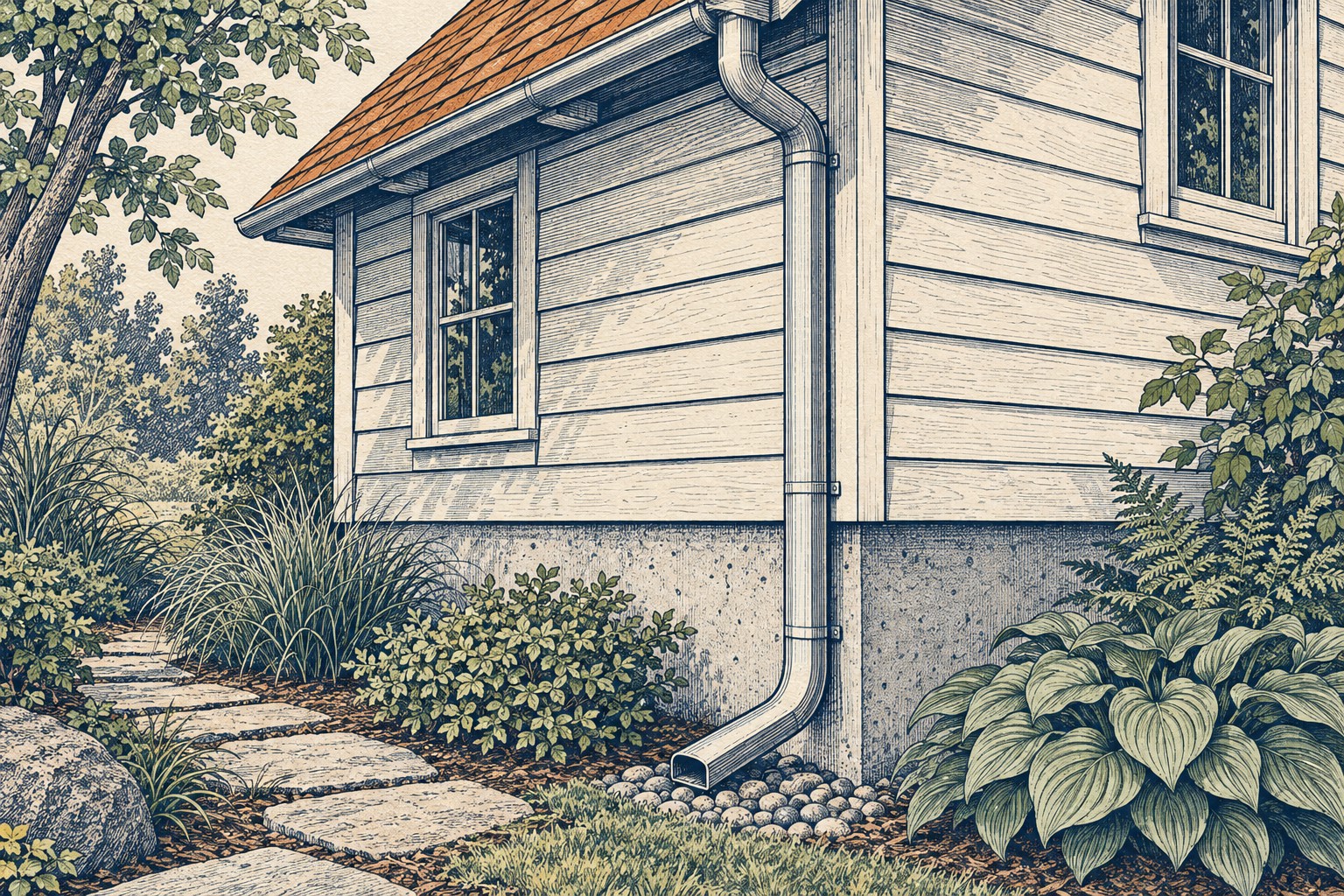
Drainage, leaks and wood-to-soil contact still deserve attention after treatment. Keep gutters and downspouts maintained, address recurring plumbing leaks and avoid piling firewood or building debris against the house. Leave accessible inspection areas visible rather than using them as permanent storage. These habits support the overall condition of the building; they are not a replacement for the treatment or monitoring plan.
Before adding a patio, changing grade, building a deck or landscaping close to the foundation, ask whether the work could affect the existing system. A contractor may not know that a particular strip of ground or small station is relevant to termite service. Share the diagram early enough for the companies to coordinate rather than discovering the issue after concrete has been poured.
Our moisture and prevention checklist offers a practical route around the house. Use it to organize maintenance observations and then ask the relevant professional about changes that go beyond ordinary safe upkeep.
Know who should receive the next question
Send a question about activity, station access or the service agreement to the termite provider. Send a question about structural capacity or repair design to an appropriately qualified building professional. Send a recurring leak to the contractor responsible for that system. Keeping those roles separate reduces the chance that a useful warning is lost because everyone assumes it belongs to someone else.
If you are comparing local assistance for a new property or a fresh assessment, subterranean termite treatment on Long Island is a relevant service topic to discuss with a provider. Bring the existing records and ask how the recommendation accounts for earlier work. Do not assume that a new company can interpret an undocumented treatment from the visible station covers alone.
Where a warranty is involved, report observations within the process and time limits it describes. Save the message and the response with the property record. That is good recordkeeping, not an accusation. A clear timeline helps everyone understand what was reported, what was checked and what remains to be done.
Conclusion
Good aftercare is a combination of records, access, maintenance and communication. Keep the actual treatment instructions, understand the service period and document changes without disturbing the system. A house with a clear history is easier to inspect, repair and hand over because the next person does not have to guess what happened before.
Frequently asked questions
How soon can I say the termites are gone?
There is no universal date for every product, system and property. Ask what evidence the provider uses to assess progress and follow the agreed inspection or monitoring plan.
Can I move a station to mow or landscape?
Do not move it without checking with the provider. Station placement and servicing are part of the system. Arrange access or a planned relocation through the company responsible for it.
Does treatment repair the damaged timber?
No. Insect control and structural repair are separate tasks. Ask a qualified building professional to assess damaged wood where needed and coordinate the work with the termite provider.
Which paperwork should stay with the house?
Keep findings, diagrams, product or system details, service dates, warranty terms, follow-up records and relevant repairs. Remove unrelated personal information before sharing copies during a transfer or sale.